
No products in the cart.
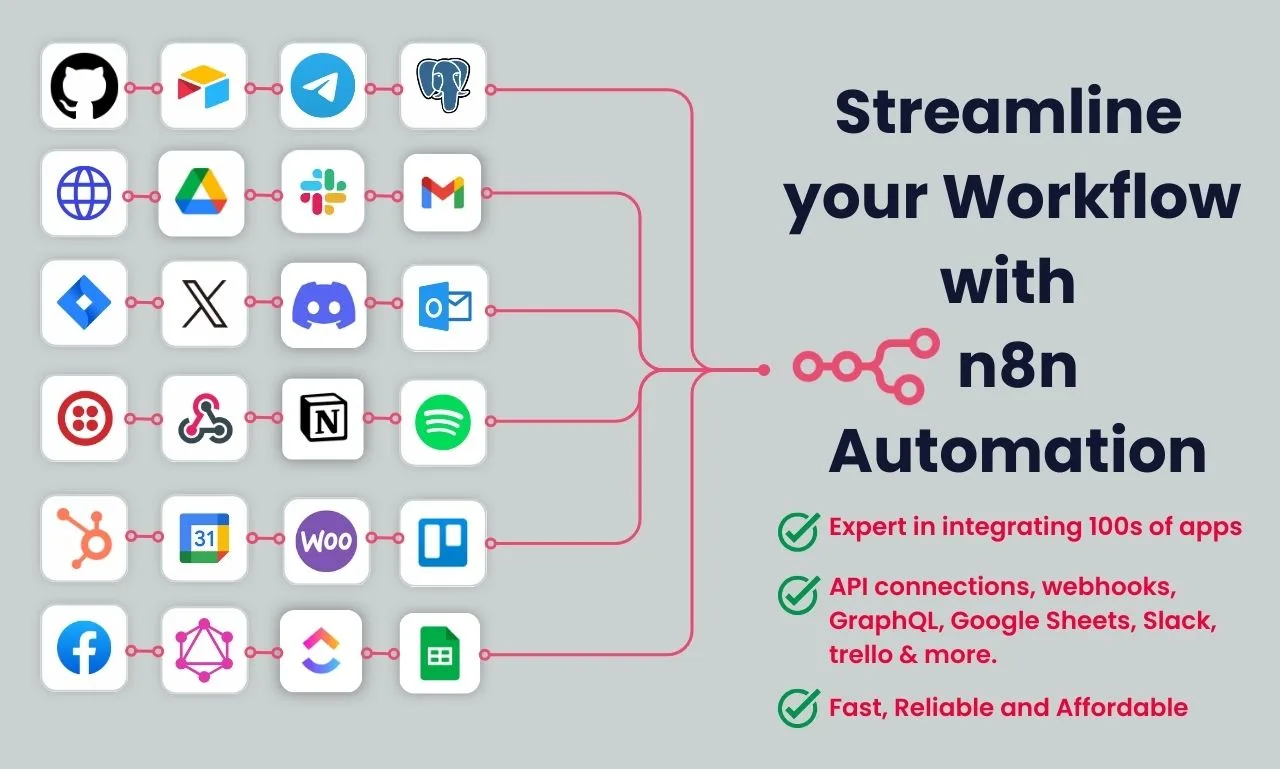
n8n Workflow Automation Explained — What Workflows Are and How They Power Modern Automation in 2025
Automation has become one of the most talked-about topics in tech — and for good reason.
In 2025, tools like n8n are redefining how individuals and businesses handle repetitive tasks.
At the center of this shift is a simple but powerful concept: the workflow.
This article breaks down what workflows really are, how n8n uses them,
and how beginners can start building automation systems that actually work.

Table of Contents
- What Is a Workflow?
- Why Workflows Matter in 2025
- What Is n8n?
- How n8n Workflows Actually Work
- Building Your First Workflow
- Real-World Use Cases
- Learning Automation the Right Way
- Final Thoughts
What Is a Workflow?
A workflow is simply a series of steps that follow a defined logic.
Instead of performing actions manually, a workflow executes them automatically
based on triggers, conditions, and outcomes.
In everyday terms, a workflow answers three questions:
- What starts the process?
- What actions should happen next?
- What conditions control the flow?
Automation tools turn these questions into visual systems that run reliably in the background.
Why Workflows Matter in 2025
Digital work has grown more complex. Content creation, data processing,
notifications, and integrations all happen simultaneously.
Handling this manually creates friction and errors.
Well-designed workflows allow systems to:
- Run continuously without supervision
- Respond instantly to events
- Scale without additional effort
This is why workflow-based automation is becoming standard across modern platforms.
What Is n8n?
n8n is an open-source automation platform built around workflows.
It connects applications, services, and APIs using visual logic instead of manual scripting.
Each workflow is made up of nodes, where every node performs a specific task —
such as receiving data, transforming it, or sending it elsewhere.
The platform is especially popular because it offers flexibility,
self-hosting options, and full control over automation logic.
How n8n Workflows Actually Work
An n8n workflow typically starts with a trigger.
This trigger listens for an event, such as a form submission,
a scheduled time, or a webhook request.
Once triggered, the workflow executes connected steps in sequence.
Conditions can be added to control different paths,
allowing workflows to adapt dynamically.
This visual approach makes complex automation easier to understand and maintain.

Building Your First Workflow
Creating a workflow in n8n usually follows a clear pattern:
- Choose a trigger (schedule, webhook, or event)
- Add action nodes to process or move data
- Define conditions for branching logic
- Test and activate the workflow
Beginners often start with simple automations and gradually
build more advanced systems as confidence grows.
Real-World Use Cases
Workflow automation is already used across many real scenarios:
- Publishing and updating content automatically
- Sending alerts and notifications
- Syncing data between platforms
- Monitoring system health
These workflows reduce manual effort while increasing reliability.
Learning Automation the Right Way
Automation works best when built incrementally.
Understanding the logic behind workflows is more important than copying templates.
For structured examples and practical walkthroughs, explore our
automation guides
and
AI-powered workflow resources.
Final Thoughts
Workflows are the foundation of automation.
Tools like n8n make them accessible, flexible, and powerful.
In 2025, understanding how workflows operate is no longer optional —
it is a core digital skill.
Automation is not about replacing humans.
It is about removing friction so humans can focus on higher-value work.